How to Determine the Age of Your AC Condenser in Temecula, CA
By Orlando Martinez · October 14, 2026 · 4 min read
When the July sun beats down on Temecula’s vineyards and suburban streets, the first thing many homeowners reach for is the indoor thermostat. If the unit is struggling to keep up, the age of the outdoor condenser could be the missing piece of the puzzle. Orlando Martinez often sees buyers in the Inland Empire and San Diego fringe asking, “How old is that thing on the roof?” Understanding a condenser’s lifespan helps you plan for repairs, budget for a replacement, and avoid surprise breakdowns during the hottest months.
In this guide, I’ll walk you through the concrete clues you can check yourself, and when it’s time to let Marine One Property Inspections take a closer look.
Look for Manufacturer Labels and Serial Numbers
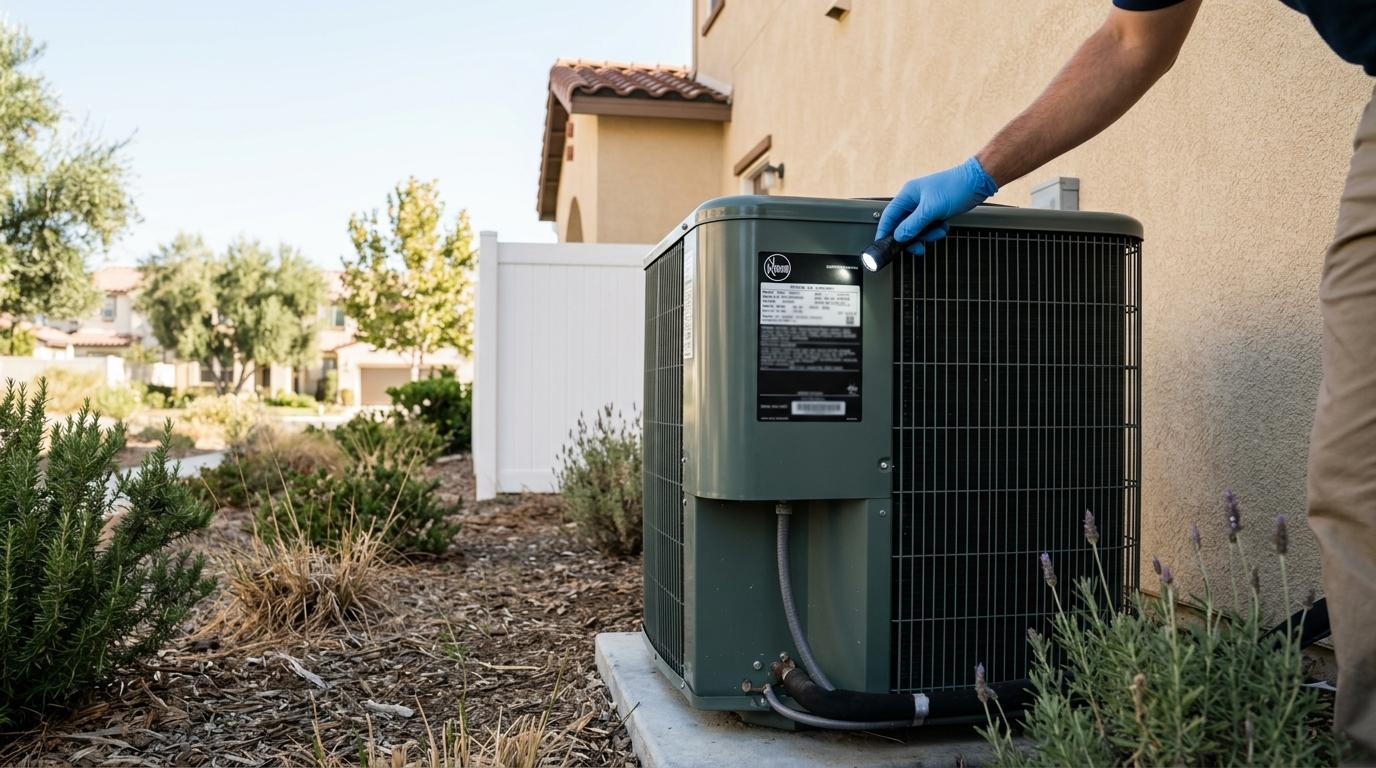
Most condensers carry a metal plate or sticker near the compressor or on the side of the cabinet. The label typically includes:
- Manufacturer name (e.g., Carrier, Trane, Goodman)
- Model number – the first few characters often indicate the series year.
- Serial number – the first two digits are usually the production year (e.g., “19” for 2019).
- UL or CSA certification tags – required for units sold in California.
To read the label:
- Turn off the power at the breaker.
- Remove the protective grille (most are secured with a few screws).
- Locate the metal tag; it may be tucked behind a coil cover.
If the tag is faded or missing, a quick photo taken during a Drone Roof Inspection can capture the details without climbing onto the roof. In Temecula’s dry climate, corrosion is less aggressive, so the label often remains legible even on units that are a decade old.
When the serial number points to a year before 2015, you’re likely looking at a unit that’s approaching the end of its typical 10‑15‑year service life.
Check Unit Design and Materials
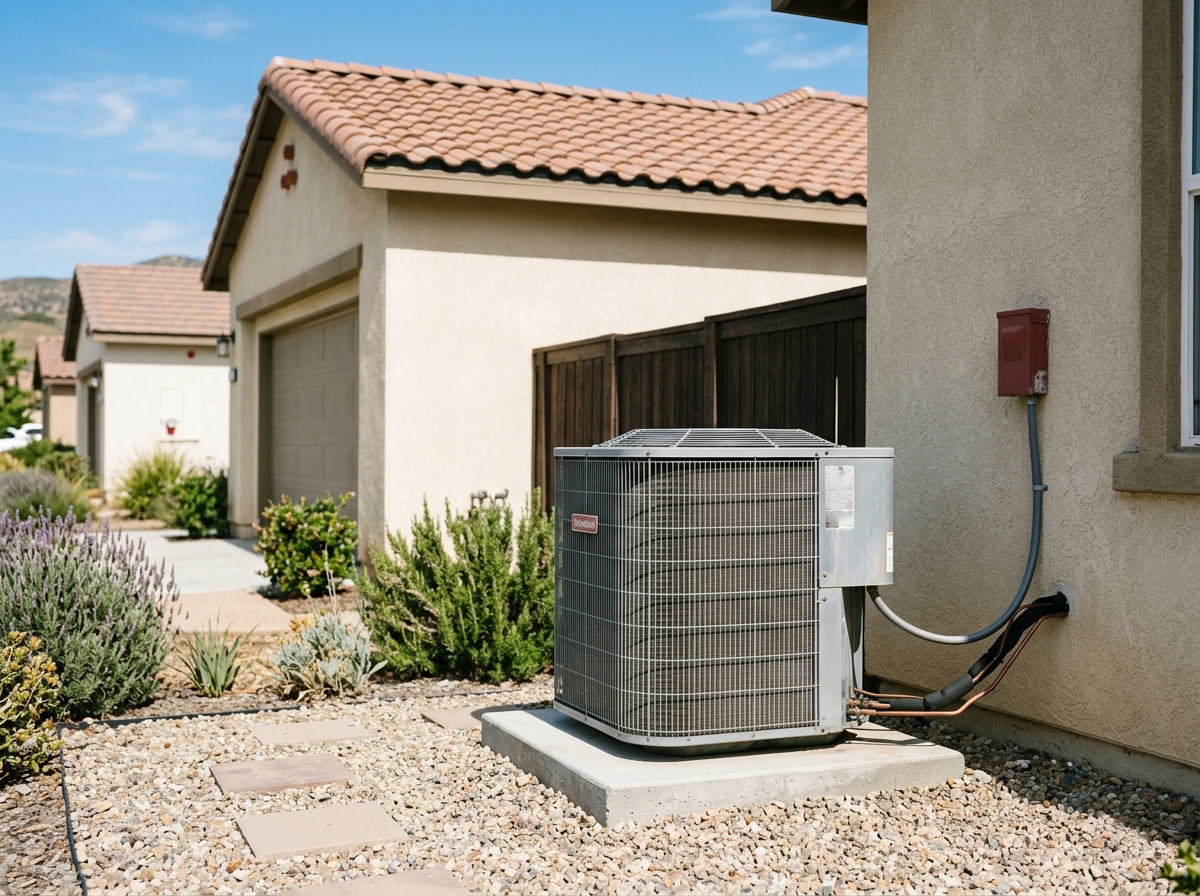
Older condensers (pre‑2005) often have design features that newer, energy‑efficient models lack:
- Copper vs. aluminum coils – Copper was standard before the early 2000s; many modern units use aluminum for lighter weight.
- Single‑stage compressors – Early units usually have a single‑stage compressor, while newer models often employ two‑stage or variable‑speed technology.
- Refrigerant type – If you see R‑22 refrigerant lines, the unit is likely older than 2010, as California mandated a phase‑out of R‑22.
- Fan motor style – Larger, noisy squirrel‑cage fans are a hallmark of older equipment, whereas newer units use quieter ECM (electronically commutated) fans.
In the Riverside‑San Bernardino corridor, many homes built in the early 2000s were retrofitted with split‑system ACs that still use older coil materials. Spotting these design cues can give you a rough age range even before you decode the serial number.
If you’re unsure about the refrigerant or coil material, a qualified HVAC technician can perform a quick visual inspection, or you can request a Mold Air Quality Testing to ensure the indoor environment isn’t affected by a leaking old unit.
Assess Wear and Performance History
Even a newer condenser can look aged if it has been over‑worked. Look for these signs:
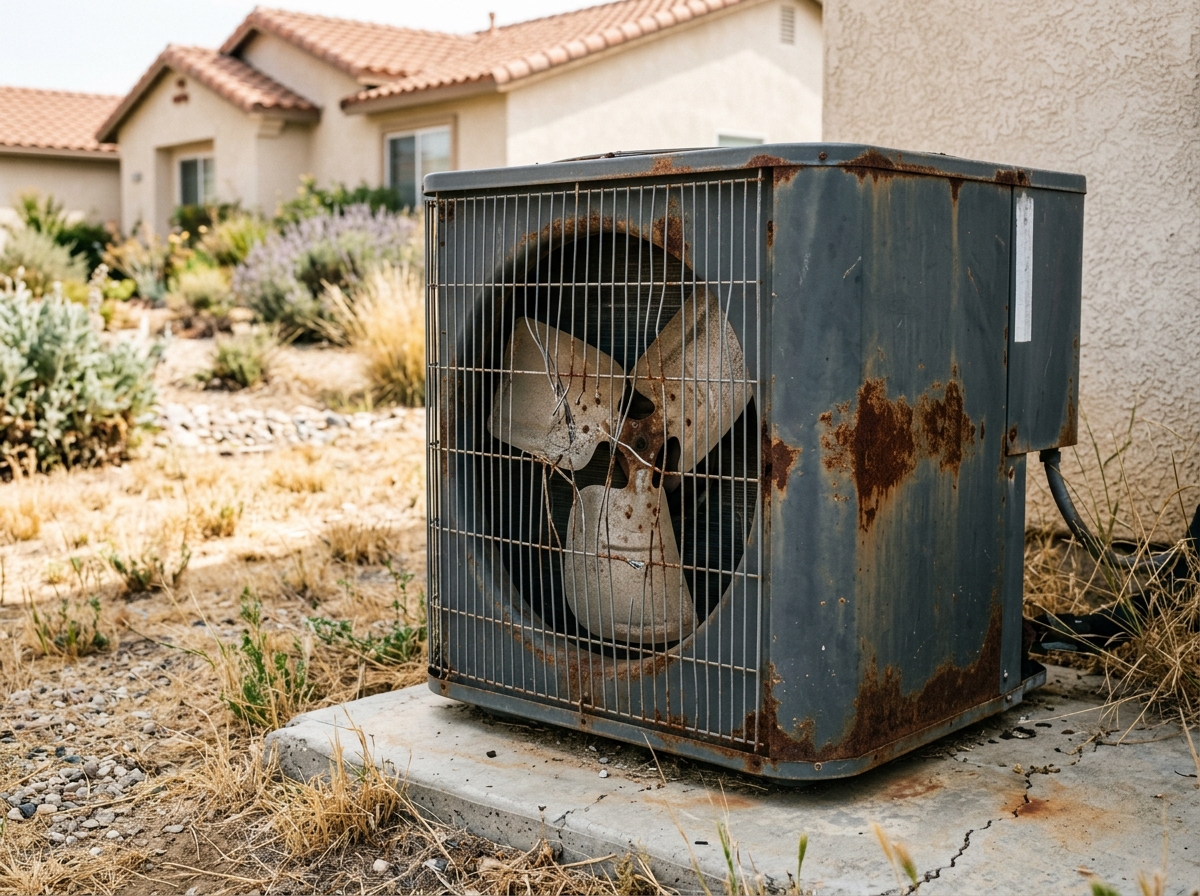
- Corrosion or rust on the outdoor coil – In Temecula’s mild winters, rust often indicates a unit that has been exposed to moisture for many years.
- Bent or missing fins – Physical damage to the coil fins suggests the unit has survived multiple storms, common in the surrounding hills of San Diego County.
- Noisy operation – Rattling, humming, or a high‑pitched whine often points to worn bearings or a failing compressor.
- Reduced cooling efficiency – If the indoor temperature stays several degrees above the thermostat setting on a 95°F day, the condenser’s capacity may have degraded.
When these symptoms appear, it’s a good cue to schedule a professional inspection. Our Drone Roof Inspection can capture the condenser’s condition from multiple angles without the need for a ladder, and Orlando Martinez can cross‑reference the visual findings with the unit’s service records. For multi‑unit buildings or commercial properties in Orange County, we also pair the visual assessment with Sewer Camera Scoping to ensure no hidden moisture issues are affecting the HVAC system.
If the unit shows multiple wear indicators, consider budgeting for a replacement rather than a repair, especially if the condenser is over 12 years old.
When to Call a Professional
Estimating the age of an AC condenser is a useful first step, but a thorough evaluation requires trained eyes and specialized tools. Marine One Property Inspections can:
- Verify the manufacture date using the serial number and cross‑check it with warranty information.
- Perform a Thermal Imaging scan to spot hidden hot spots that indicate reduced efficiency.
- Recommend a Radon Testing Monitoring if the HVAC system’s integrity could affect indoor air quality.
- Offer a full Residential Property Inspection that includes the condenser, ductwork, and any associated electrical components.
If you’re buying, selling, or simply want peace of mind before the next summer heat wave, give us a call. Orlando Martinez and the Marine One team are ready to schedule a convenient inspection for you in Temecula, surrounding areas, or anywhere in the Inland Empire.
We’re here to answer your questions, provide a clear report, and help you decide whether repair, maintenance, or replacement is the best path forward.