
Fire Suppression Systems and Homes: What Temecula Homeowners Should Know
By Orlando Martinez · October 22, 2026 · 5 min read
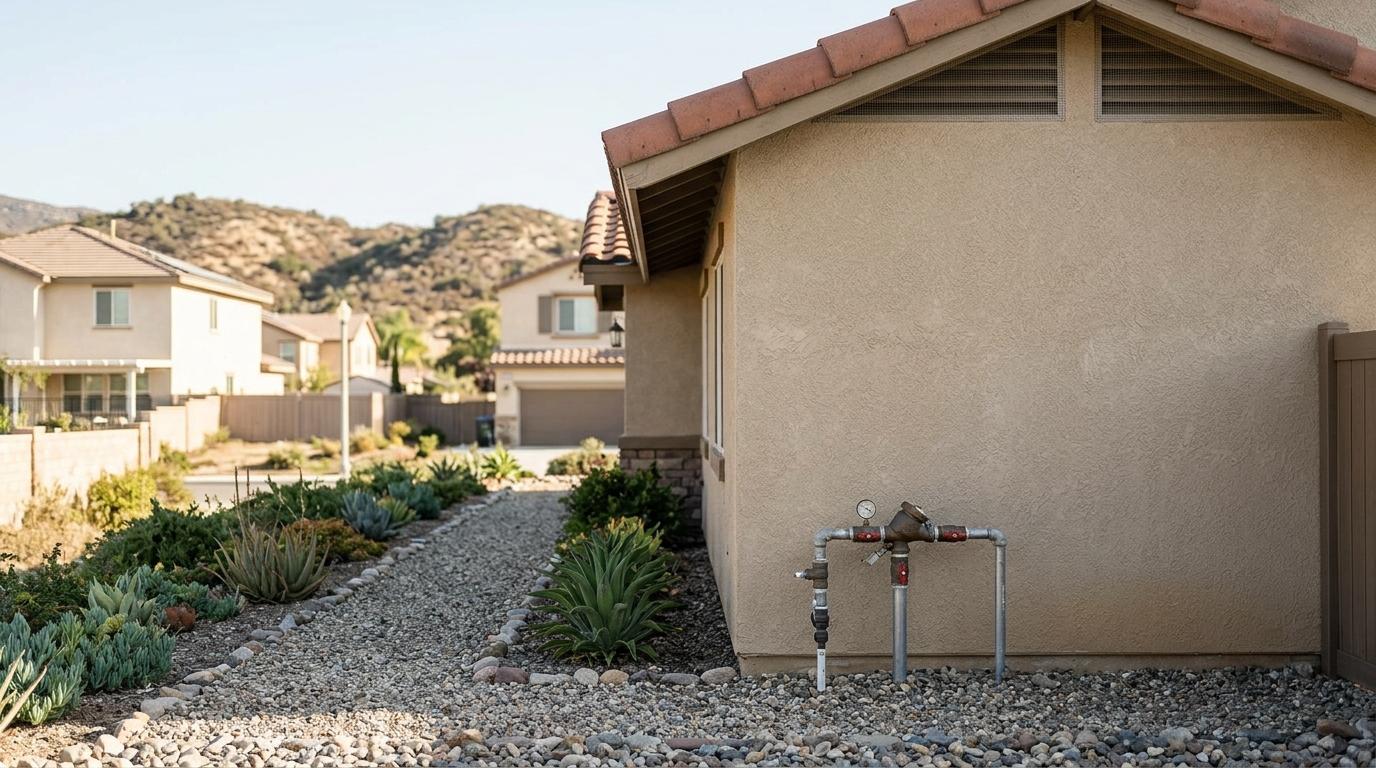
Every fall, when the Santa Ana winds kick up and the hills east of Temecula turn brown, my phone starts ringing with the same question: "Does this house have fire suppression?" It's a fair question in a region where wildfire risk is real and insurance carriers are asking harder questions than they used to. But "fire suppression" means different things depending on whether you're buying a tract home in Murrieta, a custom property out in wine country, or a condo in Anaheim. In this post, I'll break down what actually counts as fire suppression in a home, how it differs from wildfire defense, and what a property inspection can realistically tell you about the systems in place.
What Counts as a Fire Suppression System in a Home
What Counts as a Fire Suppression System in a Home
When people say "fire suppression," they usually mean one of a few things:
- Residential fire sprinkler systems — piped water delivery that activates on heat, typically required in newer multi-family buildings and some newer single-family construction.
- Fire extinguishers — portable, occupant-operated, and the most common form of suppression in a typical single-family home.
- Smoke and heat detection — not suppression itself, but the early warning layer that makes suppression possible.
- Kitchen hood suppression — found in commercial kitchens and some large residential kitchens with commercial-style ranges.
In most single-family homes across Temecula, Riverside, and the Inland Empire, you won't find a built-in sprinkler system. What you'll find is a combination of smoke alarms, sometimes a heat detector in the garage, and a fire extinguisher that may or may not have been serviced since the house was built.
That's not a failure — it's just the reality of how most California single-family housing was built. The important thing is knowing what you actually have, not what you assume you have.
Sprinklers, Standpipes, and Multi-Unit Buildings
Sprinklers, Standpipes, and Multi-Unit Buildings
If you're looking at a condo, townhome, or apartment building in Anaheim, San Diego, or along the 15 corridor, the picture changes. Multi-unit residential buildings are far more likely to have an actual sprinkler system, often with a standpipe connection for the fire department and a riser room somewhere on the property.
Here's what I tell buyers in those situations:
- Sprinkler heads are designed to activate individually, not all at once. A single head going off is not a building-wide flood.
- Heads are heat-activated, not smoke-activated. Steam from a shower won't set them off.
- Systems have a main control valve, and it should be accessible and clearly identified.
- Annual or periodic servicing is typically the responsibility of the HOA or building owner, not the individual unit owner.
When Marine One Property Inspections handles multi-unit and commercial work, we look at what's visible and accessible — control valves, riser rooms, visible piping, head condition, and any obvious signs of corrosion or damage. What we can't do is flow-test the system or certify it. That's a job for a licensed fire protection contractor, and I'll say so plainly in the report.
Wildfire Defense Is a Different Conversation
Wildfire Defense Is a Different Conversation
Here's where I see the most confusion. A home with a residential sprinkler system is not automatically "fire-safe" in a wildfire. Interior sprinklers are designed to control a fire that starts inside the structure. They do nothing about embers landing on a wood-shake roof or a dry palm frond piling up in a gutter.
Wildfire defense is about the exterior — the things you can see from the street or from above:
- Roof material and condition — Class A roofing, intact flashing, no missing tiles or exposed underlayment.
- Defensible space — clearing brush and vegetation within the first several feet of the structure.
- Vents and eaves — ember-resistant venting and screened openings.
- Gutters and roof valleys — where dry debris collects and ignites.
This is one of the reasons I lean on drone roof inspections for properties in the Temecula area and out toward the surrounding hills. A lot of the wildfire-relevant detail is on the roof, and it's not something you can properly assess from the ground. Thermal imaging can also help identify hot spots or moisture issues that aren't visible to the naked eye — but it's a diagnostic tool, not a guarantee.
If you're buying in a high fire severity zone, ask your insurance carrier what they specifically want to see. Their list is usually more detailed than any general advice.
What a Home Inspection Can and Can't Tell You
What a Home Inspection Can and Can't Tell You
I want to be direct about this, because it matters. A standard residential property inspection is visual and non-invasive. That means:
What we can observe:
- Presence and general condition of smoke alarms and carbon monoxide detectors
- Visible fire extinguishers and their locations
- Visible sprinkler heads, piping, and control valves in accessible areas
- Roof covering, flashing, and obvious fire-risk conditions
- Attic and crawlspace conditions via CrawlBot where access is limited
- Signs of past fire damage, charring, or improper repairs
What we cannot do:
- Flow-test or certify a sprinkler system
- Confirm code compliance or issue permits
- Guarantee that a system will function during an emergency
- Replace the role of a licensed fire protection contractor or your local fire authority
If a system needs certification — for insurance, for an HOA, or for your own peace of mind — you'll want to bring in a specialist. I'll flag what I see and point you toward the right next step. That's the honest scope of the work.
Radon, Mold, and the Air You Can't See
Radon, Mold, and the Air You Can't See
Fire suppression gets the attention, but there's a quieter set of concerns I test for regularly in this region. Radon is naturally occurring and can accumulate in homes regardless of how new or well-built they are. Mold and air quality issues show up after water intrusion, which we see more of following winter rains in Riverside and San Bernardino counties.
Neither of these is a fire issue, but they're part of the same conversation: the things inside a home that affect the people living in it. Marine One Property Inspections offers radon testing and monitoring, and mold and air quality testing, because a complete picture of a home isn't just about what's visible on the surface.
If you're buying, selling, or just want to know what you're living with, these tests are straightforward and worth considering alongside a standard inspection.
Let's Take a Look at Your Property
Let's Take a Look at Your Property
If you're buying or selling a home in Temecula, Murrieta, San Diego, Orange County, the Inland Empire, or anywhere along the 15 and 215 corridors, I'm happy to walk the property with you and answer questions about fire suppression, roof condition, or anything else that comes up. Every home is different, and the right next step depends on what you're actually dealing with.
You can reach Marine One Property Inspections to schedule a residential inspection, a drone roof assessment, a sewer camera scope, or any of the other services we offer. If you're not sure what you need, just ask — I'd rather help you figure out the right scope than sell you something you don't need.
Orlando Martinez and the team at Marine One Property Inspections are here to help you understand the home you're buying, selling, or living in.