
What Does Particle Testing in Homes Tell You? A Temecula Inspector's Guide to Air Quality
By Orlando Martinez · October 29, 2026 · 4 min read
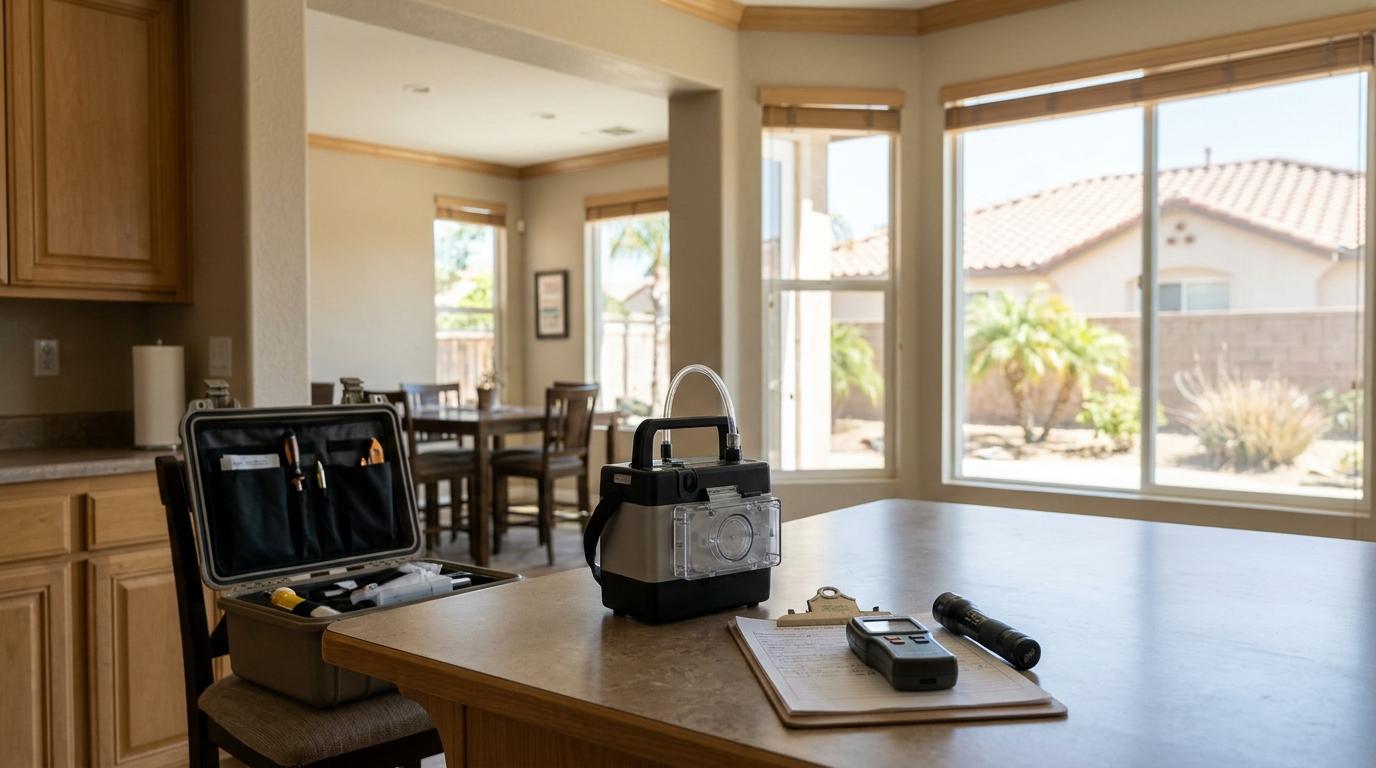
If you've ever noticed a musty smell in a Temecula home during the hot, dry months — or found yourself sneezing more than usual after the Santa Ana winds blow through — you've probably wondered whether something in the air is causing it. Particle testing is one of the tools we use at Marine One Property Inspections to help answer that question.
It's not a magic answer machine, and it won't tell you definitively whether your home is "safe" or "unsafe." What it does is give you real, measurable data about what's floating in the air you're breathing — and that data can point you toward the right next step, whether that's better ventilation, a professional mold assessment, or simply a good duct cleaning.
Here's how it works and what the results actually mean.
What Particle Testing Actually Measures
Airborne particle testing pulls a sample of your indoor air and counts and categorizes the particles in it. Those particles generally fall into a few buckets:
- Particulate matter (PM) — tiny solid and liquid droplets, often split into PM2.5 and PM10 by size. Dust, smoke, and combustion byproducts fall here.
- Bioaerosols — mold spores, pollen, bacteria, and other biological particles.
- Allergens — pet dander, dust mite fragments, and similar irritants.
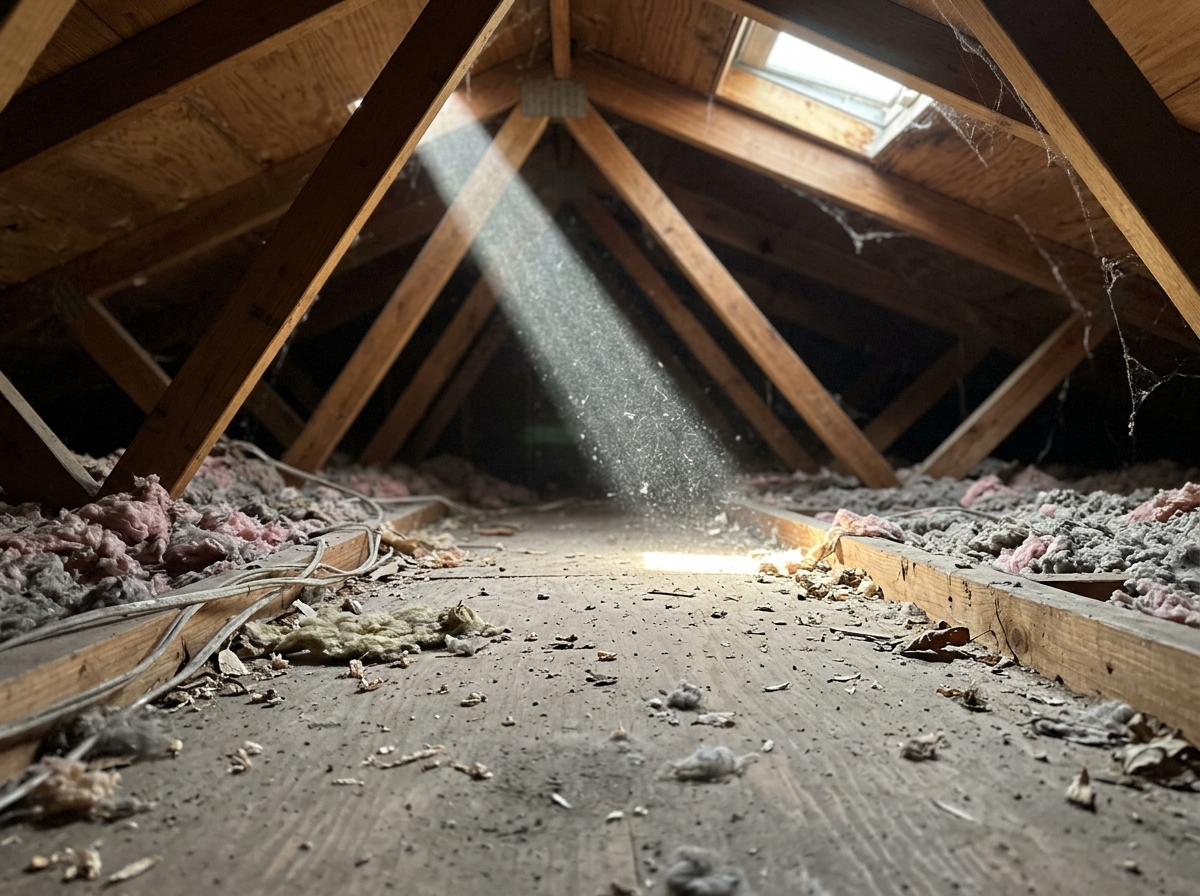
- Fibrous particles — including things like fiberglass from insulation.
What the test doesn't do is identify a specific mold species or tell you where a problem is coming from. That's why we pair particle testing with other tools — a mold air quality test, thermal imaging, and a physical walkthrough of the home — so the numbers have context.
A single particle count in isolation is nearly meaningless. What matters is the comparison: indoor air versus outdoor air, one room versus another, and how the numbers line up with what we see during the inspection.
Why Local Conditions Matter in Temecula and the Inland Empire
Air quality issues in our service area don't look the same as they do in, say, the Pacific Northwest. Here's what we run into regularly:
- Dry, dusty summers. In Temecula, Murrieta, and the surrounding Inland Empire, fine dust is a year-round reality. When windows stay open during warm evenings, that dust comes inside.
- Santa Ana winds. These dry, gusty events push debris and particulate matter through attic vents, garage gaps, and older window seals.
- Inland heat and HVAC use. Long cooling seasons mean your air handler runs constantly, and a neglected filter or dirty ductwork spreads particles rather than removing them.
- Coastal vs. inland humidity differences. Homes closer to Anaheim, Orange County, and San Diego may see more moisture-related issues — think crawlspace humidity or attic condensation — that inland homes rarely deal with.
- Wildfire smoke seasons. Particle counts spike noticeably during smoke events, and homes without proper filtration feel it indoors.
That's the local context. A particle reading in a 1970s Riverside ranch house with original ductwork tells a different story than the same reading in a newer Temecula build with a tight envelope and a modern filtration system.
What the Results Can — and Can't — Tell You
When we review particle testing results with a client, here's the honest breakdown:
What it can tell you:
- Whether indoor particle levels are elevated compared to outdoor baseline
- Whether a specific room (say, a bedroom or a finished basement) is consistently higher than the rest of the house
- Whether mold spores or allergens are present at levels worth investigating further
- Whether your HVAC filtration is doing its job
What it can't tell you:
- The exact source of a problem
- Whether a specific particle is harmful to a specific person
- Whether your home is "safe" — that's not a determination an inspection can make
If results come back elevated, the next step is usually a targeted investigation. That might mean a Sewer Camera Scoping to check for hidden moisture sources, or a full mold air quality test with lab analysis. It might also mean a conversation with a licensed HVAC contractor or an environmental specialist, depending on what the numbers and the walkthrough suggest.
Where Particle Testing Fits in a Marine One Inspection
Particle testing isn't a standalone verdict — it's one piece of a bigger picture. At Marine One Property Inspections, Orlando Martinez and our team use it alongside tools like the CrawlBot Foundation inspection, drone roof inspections, thermal imaging, and radon testing and monitoring to build a fuller understanding of a home.
A few scenarios where it's especially useful:
- Buying a home in Riverside or San Bernardino where you're unsure about the history of moisture, pets, or past renovations
- Selling a home and wanting to address air quality questions before they come up in negotiation
- Warranty inspections on a newer build where you want a baseline for future comparison
- Multi-unit and commercial properties where tenant comfort and air quality are ongoing concerns
We serve homeowners across Temecula, San Diego, Orange County, the Inland Empire, Anaheim, and the surrounding areas. Every inspection is visual and limited in scope — we report what we observe and measure, and we're clear about what falls outside that scope.
Ready to Know What's in Your Air?
If you're curious about the air quality in your Temecula-area home — or you're buying, selling, or maintaining a property and want a clearer picture — we're happy to help. Particle testing, mold air quality testing, and the rest of our inspection services are available throughout our service area.
Reach out to Marine One Property Inspections to schedule an inspection or just to ask a question. No pressure, no sales pitch — just straightforward information so you can make a confident decision about your home.
Give us a call or visit our website to get started.