
Radon Continuous Monitoring in Temecula: Why a One-Time Test May Not Be Enough
By Orlando Martinez · October 22, 2026 · 6 min read
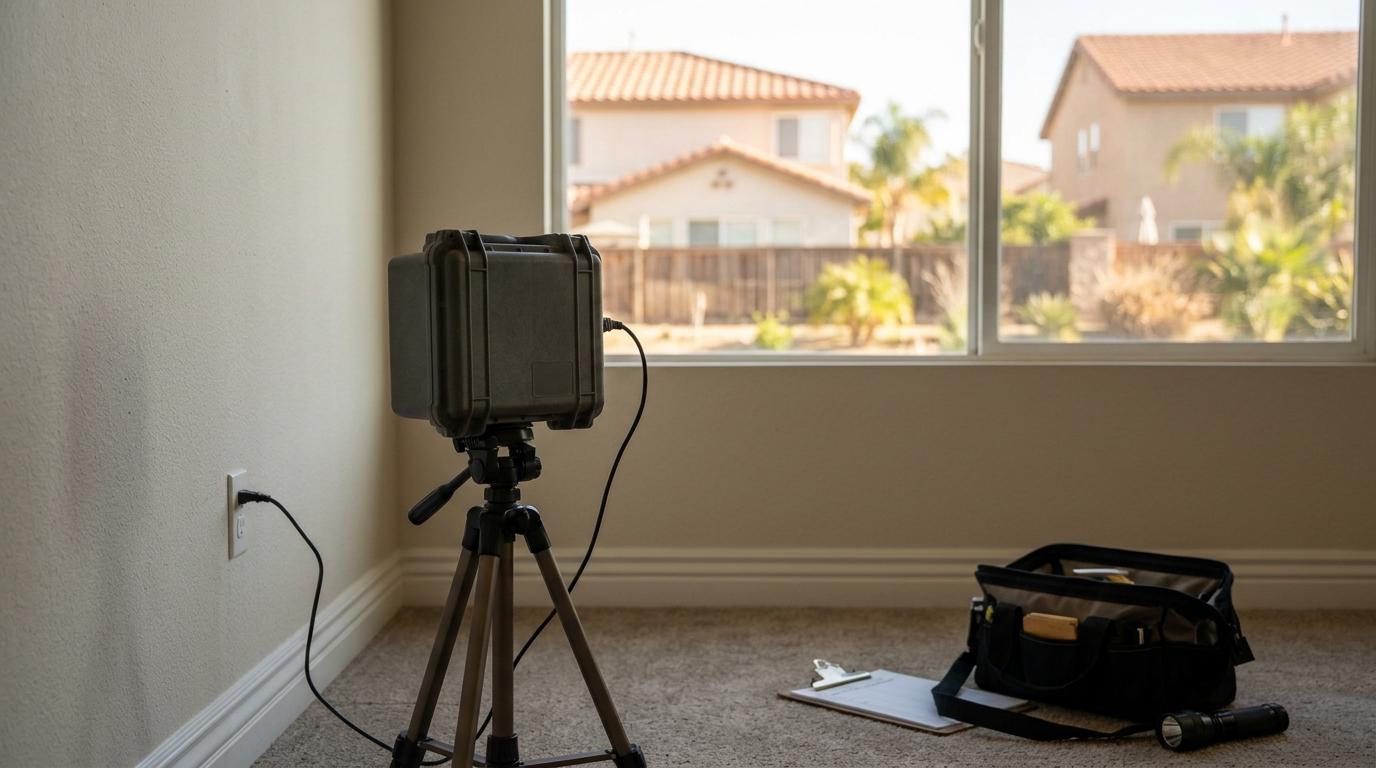
A Temecula homeowner called me last spring after a short-term radon test came back low. She'd already packed the test kit away when her neighbor — same tract, same floor plan, two streets over — got a reading nearly three times higher. Same granite under both homes, same Santa Ana winds in October, same closed-up house all summer. So why the difference?
Radon isn't a fixed number. It moves. It shifts with the weather, the season, how often you run the AC, whether the windows are open, and even how the soil under your slab is breathing that week. A single test is a snapshot. Continuous monitoring is more like a time-lapse — and for a lot of homes in Temecula, Murrieta, and the surrounding valleys, that fuller picture is what actually helps you make a decision.
I'm Orlando Martinez with Marine One Property Inspections. I've spent decades in and under Southern California homes, and radon is one of those things where the data matters more than the drama. Let's talk about what continuous monitoring is, when it makes sense, and how it fits into a normal inspection.
What "Continuous" Actually Means
A traditional short-term radon test sits in your home for a few days, then gets mailed to a lab. It's a useful tool, and it's the standard for a lot of real estate transactions. But it captures one window of time.
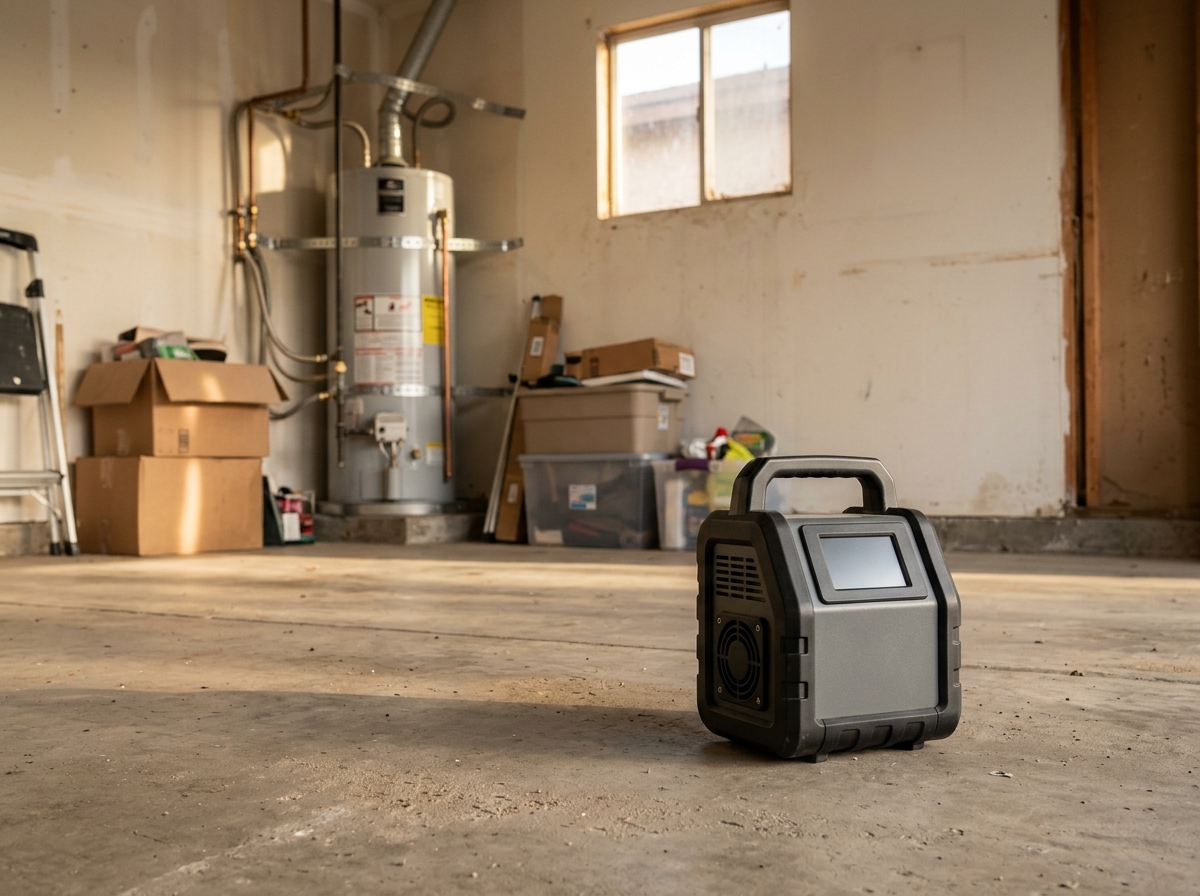
A continuous radon monitor is different. It's an electronic device that stays in place and logs readings hour by hour — sometimes for weeks or months. Instead of one average, you get a curve. You can see:
- Whether levels climb overnight when the house is closed up
- Whether they spike during a particular weather pattern
- Whether a basement or lower-level room reads differently than the main floor
- Whether the numbers are trending up over a season
That last point matters in our area. Inland Empire and Temecula Valley homes often run closed-up for months at a time — windows shut, AC cycling, little natural ventilation. That's exactly the condition where radon can accumulate. A monitor that runs through those weeks tells a more honest story than a three-day kit dropped off during a mild week in April.
Why Temecula and the Surrounding Areas Get Tricky
Southern California isn't usually the first place people think of when they hear "radon." But radon comes from soil and rock — and we have plenty of both. Granitic soils, decomposed granite, and the varied geology running from the Temecula Valley out toward Riverside, San Bernardino, and down into San Diego County all can produce radon. It's not a coastal-versus-inland thing, and it's not a "bad neighborhood" thing. It's a soil-and-house thing.
Here's what makes our region interesting:
- Weather swings. We can go from 100-degree days to cool, closed-up nights in the same week. Pressure changes push soil gas around.
- Construction styles vary widely. A 1980s tract home in Temecula, a custom build in the hills near Fallbrook, and a 1950s bungalow in Anaheim all handle soil gas differently.
- Additions and remodels. A new slab, a converted garage, a sealed-up crawlspace — these change how a house breathes.
- Multi-unit and commercial buildings. Radon behavior in a duplex or a small commercial space isn't the same as a single-family home, and it often needs its own approach.
That's why I don't hand out blanket statements like "your area is fine" or "your area is dangerous." The only way to know what's happening in your home is to measure it — and ideally, measure it over time.
How Continuous Monitoring Fits With a Home Inspection
Radon monitoring isn't a replacement for a full home inspection — it's a companion to it. When I'm at a property, I'm already looking at the things that affect how air and soil gas move through the house: foundation type, crawlspace condition, drainage, ventilation, HVAC setup, and any signs of moisture intrusion.
If you're buying in Temecula, Murrieta, Menifee, or anywhere across our service area — Riverside, San Bernardino, Orange County, San Diego, Anaheim, the Inland Empire — radon monitoring can be scheduled alongside your standard residential inspection. For sellers, it can be a smart pre-listing step so you're not surprised mid-escrow. For warranty inspections, it's a chance to re-check a home after a year of real living.
A few practical notes:
- Monitors need closed-house conditions to give meaningful readings. That means windows and doors shut (normal entry and exit is fine) for the duration.
- Placement matters. Lowest livable level is the standard starting point.
- Results are informational. They help you decide whether to bring in a licensed radon mitigation professional for a closer look.
I'm also set up for related services that often come up in the same conversation — mold and air quality testing, sewer camera scoping, CrawlBot foundation inspections, drone roof inspections, and pool and spa checks. If we're already at the house, it usually makes sense to look at the whole picture rather than one piece at a time.
What to Do With the Numbers
When your monitoring period wraps up, you'll get data — not a verdict. That's on purpose. Radon is a health topic, and the right next step depends on your specific readings, your home, and your family's situation. I'll walk you through what the numbers show and what they generally mean, but for health-related decisions, the appropriate move is to talk with a qualified professional — often a licensed radon mitigation contractor — and follow current guidance from the EPA and state health resources.
A few general things worth knowing:
- Radon is measured in picocuries per liter (pCi/L).
- There are established action levels that professionals use as a reference point.
- Mitigation systems exist and are common. They're not exotic or scary.
- Re-testing after any mitigation work is standard practice.
What I won't do is tell you your home is "safe" or "unsafe" based on a single reading. That's not how this works, and anyone who promises that is overselling. What I can do is give you clean, well-documented data and honest context so you can make an informed call.
A Quick Word on the Rest of the House
Radon is one thread in a bigger fabric. In our region, I regularly find moisture issues in crawlspaces after a wet winter, aging roof components on 1990s builds, pool equipment past its service life, and sewer lines that need a camera to really understand. None of that shows up in a radon reading — and a radon reading won't show up in a roof inspection.
That's why Marine One Property Inspections offers the range we do. Whether it's a single-family home in Temecula, a multi-unit property in Riverside, or a commercial space in Orange County, the goal is the same: give you a clear, honest picture of what you're buying, selling, or living in. No scare tactics, no fluff. Just what's there.
Questions About Radon in Your Home?
If you've been putting off radon testing because you weren't sure a one-time kit would tell you much — that instinct isn't wrong. Continuous monitoring exists precisely because radon isn't a single number.
If you're in Temecula or anywhere across our service area — San Diego, Orange County, the Inland Empire, Riverside, San Bernardino, Anaheim, and the surrounding communities — and you'd like to talk through whether continuous radon monitoring makes sense for your property, I'm happy to answer questions. No pressure, no pitch. Just a straight conversation about your home and what would actually be useful to measure.
You can reach Marine One Property Inspections to schedule a radon monitoring appointment, bundle it with a full residential inspection, or ask about any of our other services — sewer scoping, mold and air quality testing, foundation inspections, drone roof checks, or pool and spa evaluations. Whenever you're ready, we're here to help.