
High Radon Levels in Your Temecula Home? How Mitigation Actually Works
By Orlando Martinez · October 28, 2026 · 5 min read
A few months back, a family in Murrieta called me after a short-term radon test came back at nearly three times the EPA action level. They'd lived in the house for nine years. Nobody had ever mentioned radon at closing. That's not unusual around here — our granite-heavy soils and the way newer tract homes are sealed up tight can both push radon levels higher than people expect.
I'm Orlando Martinez with Marine One Property Inspections, based in Temecula and serving homeowners across Riverside, San Bernardino, San Diego, Orange County, and the Inland Empire. Radon testing and monitoring is one of our core services, and the question I get most isn't "should I test?" — it's "okay, I tested high. Now what?"
This post walks through what mitigation actually involves, so you can make an informed decision instead of a panicked one.
First, Make Sure the Test Was Valid
Before you spend money on mitigation, confirm the test result is trustworthy. Radon levels fluctuate with weather, season, and how the house is operated, so a single short-term test isn't the final word.
A few things that can skew a result:
- Doors and windows left open during the test. In our climate it's tempting, especially in spring and fall.
- Test placement. Kits set in a kitchen, bathroom, or laundry room don't tell you much.
- Short test windows. A 2–3 day charcoal kit is a screening tool. A long-term test (90+ days) gives a much better picture of your actual exposure.
If your first result was high, the standard next step is a follow-up test — either a second short-term test under closed-house conditions, or a long-term test. If both come back elevated, that's when mitigation becomes a real conversation. If you're not sure whether your test was done correctly, that's a good time to call a certified inspector rather than guess.
What Radon Mitigation Actually Is
Mitigation — sometimes called remediation — is the process of reducing radon concentrations inside your home. It's not a renovation. It's a targeted system, and most homes only need one.
The most common approach is sub-slab depressurization. Here's the plain version:
- A small hole is cored through the slab or foundation.
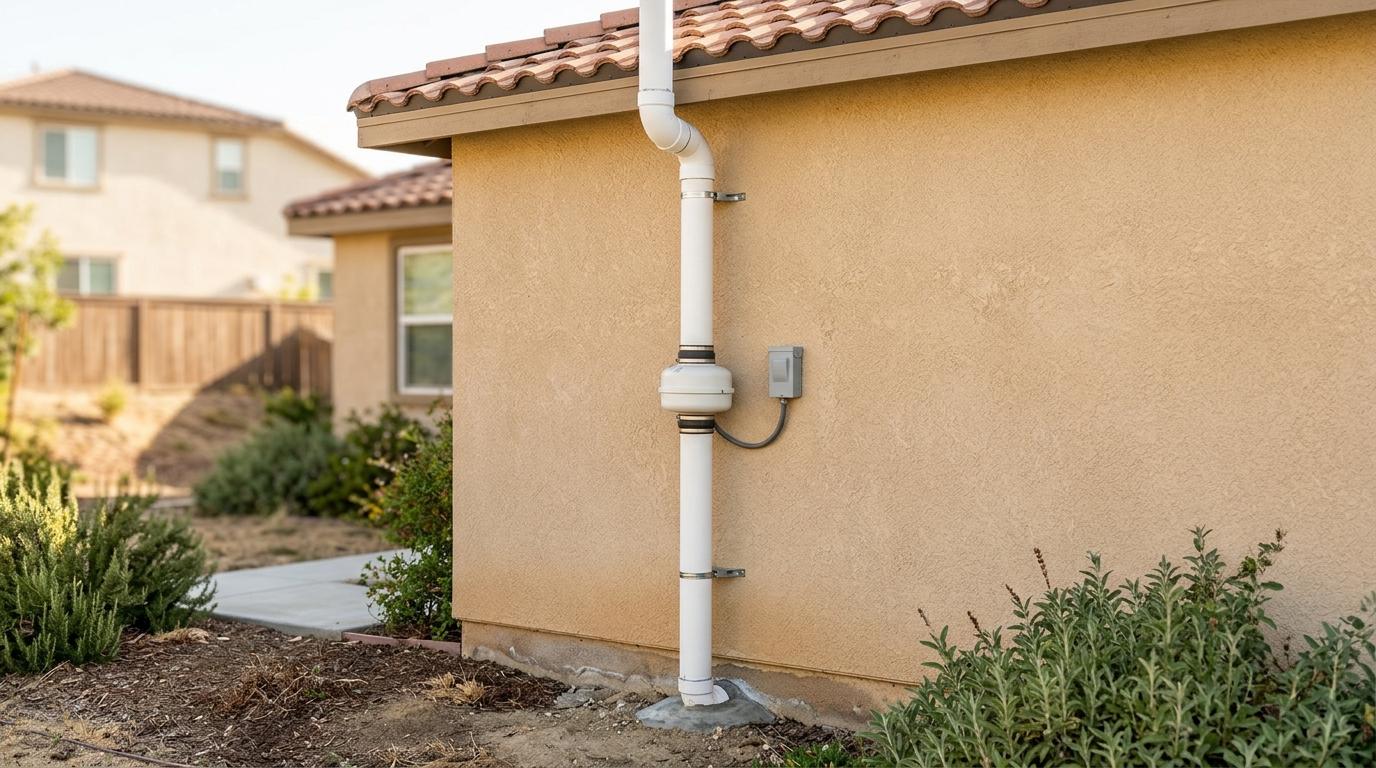
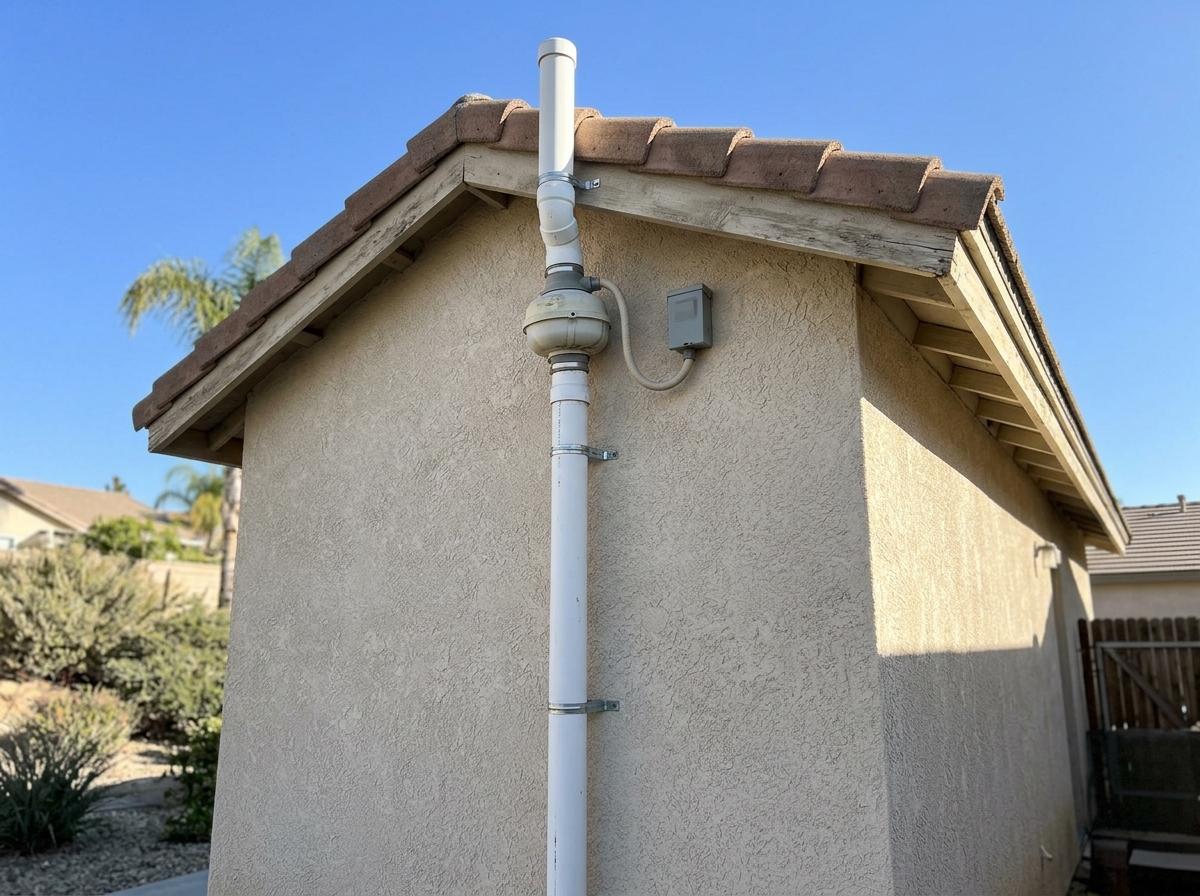
- A PVC pipe is run from beneath the slab up through the house and out above the roofline.
- A quiet inline fan continuously pulls soil gas from under the foundation and vents it outside, above the living space.
- The system is sealed at every penetration so the gas doesn't find its way back in.
For homes on a crawlspace — which we see plenty of in older parts of Riverside and San Bernardino — the approach may be a sub-membrane depressurization system, where a sealed plastic membrane covers the crawlspace floor and the same fan-and-pipe setup draws gas from underneath it.
In some cases, a contractor may also address entry points like sump pits, foundation cracks, or utility penetrations. Occasionally, a home needs more than one system or a different fan configuration. The right design depends on the foundation type, soil, and how the house is built.
What to Expect During and After Installation
A typical residential mitigation system is installed in a day. You'll see a PVC pipe running up an exterior wall or through an interior closet, and a small fan mounted either in the attic or on the outside of the house. The fan runs continuously and uses roughly the electricity of a light bulb.
After installation, the contractor should:
- Re-test the home to confirm levels dropped. Don't skip this.
- Install a manometer — a small gauge that shows the system is pulling suction.
- Label the system and walk you through what to watch for.
Going forward, you'll want to glance at that gauge occasionally, keep the vent pipe clear, and re-test every couple of years or after any major foundation work, remodel, or roof replacement. If you ever sell the home, having documentation of the system and a recent test result is a real asset — it's one of the first things a buyer's inspector will look for.
One thing I'll say plainly: I'm an inspector, not a mitigation contractor. I can test your home, help you understand the results, and refer you to qualified mitigation professionals. I don't install systems, and I don't take a cut from anyone who does.
Why This Matters More in Some Local Homes Than Others
Radon isn't evenly distributed. It comes from the decay of uranium in soil and rock, and certain areas have more of it. In our service area, that includes pockets of Temecula, Murrieta, Menifee, and out toward the San Bernardino foothills. But it also shows up in homes where nobody expected it — newer construction in Anaheim, a 1970s ranch house in Riverside, a condo in San Diego.
A few local factors worth knowing:
- Newer, tighter homes hold radon in better than drafty older ones. That's not a knock on new construction; it's just physics.
- Granite countertops and decorative stone can contribute small amounts, though the soil beneath your home is usually the bigger factor.
- Seasonal swings matter. A test in July may read differently than one in January.
- Multi-unit and commercial buildings need their own approach — we handle those too, and radon can vary unit to unit.
If you're buying a home in this region and radon wasn't part of your inspection, it's worth asking why. It's a cheap test relative to the peace of mind it buys.
What Marine One Can Do For You
If you're not sure where to start, here's how we can help:
- Radon testing and monitoring — proper placement, proper conditions, clear results you can act on.
- Sewer camera scoping, mold and air quality testing, CrawlBot foundation inspections, and drone roof inspections — often bundled with a radon test when you're buying or selling.
- Pool and spa inspections, sellers inspections, and warranty inspections for homeowners who want a full picture before listing or after closing.
We're based in Temecula and work throughout Riverside, San Bernardino, San Diego, Orange County, the Inland Empire, and Anaheim. If you've got a radon result you don't understand, or you've never tested and want to know whether your home is in a higher-risk area, reach out. No pressure, no scare tactics — just a straight answer and a plan.
Give Marine One Property Inspections a call or send us a message to schedule a radon test or ask a question. We're happy to walk you through it.